












Eetha : The Journey Of A Legendary Artist
She packed crowds across Maharashtra for decades. Now, decades after her passing, Bollywood is finally telling her story.

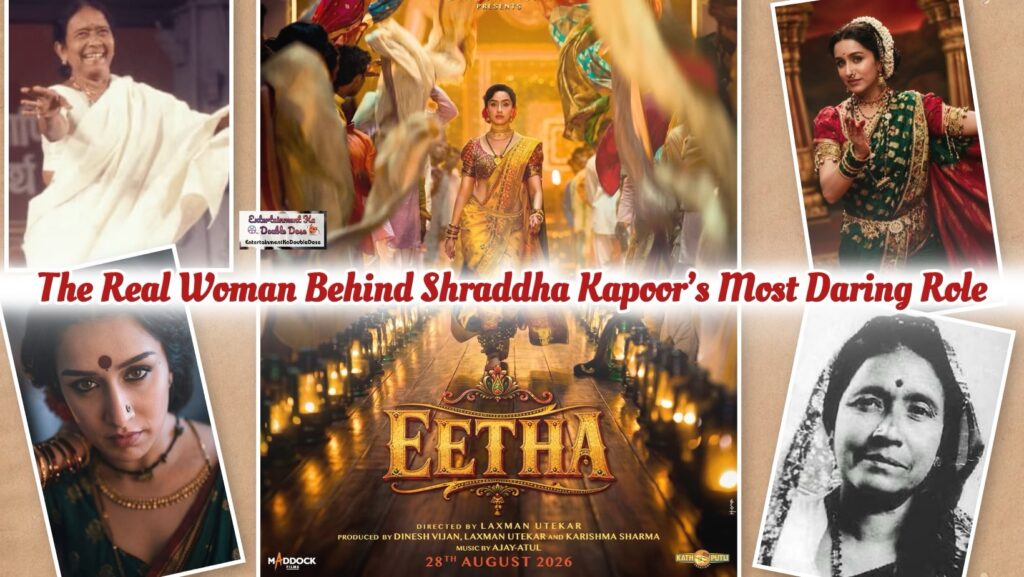
When the teaser for Eetha dropped on June 23, 2026, it stopped people mid-scroll. Shraddha Kapoor — barely recognisable, performing through labour pains on a folk stage — wasn’t what anyone was expecting. The clip spread fast. And right behind it came one question, repeated across every comment section: Who actually was Vithabai Narayangaonkar?
Here’s everything you need to know. 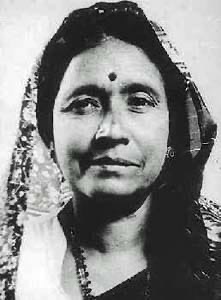
Born Into a World of Folk Art
Vithabai Bhau Mang Narayangaonkar came into the world in July 1935 in Pandharpur, Solapur district, Maharashtra. She didn’t discover folk theatre — she was born into its very heartbeat. Her grandfather Narayan Khude had originally founded the family’s performing troupe, which her father and uncle later took over under the name Bhau-Bapu Mang Narayangaonkar.
Growing up surrounded by Lavani, Gavlan, and Tamasha performances, Vithabai absorbed the art naturally. She wasn’t a standout student in school, but the moment she stepped onto a stage, something clicked. No formal training, no classical schooling — just raw instinct and a presence that audiences couldn’t look away from. 
Her sisters Ramabai and Kesharbai helped shape her Lavani technique further. By the age of 13, she had already launched her own Tamasha troupe — remarkable by any standard, extraordinary for 1948.
A Name That Filled Grounds
What Vithabai built over the following decades wasn’t just a career — it was a reputation that preceded her everywhere she performed. Villages, open grounds, towns across Maharashtra — her name alone was enough to draw massive crowds. People didn’t just come to watch a Tamasha show; they came specifically to watch her. 
A defining moment came in 1957 when her father passed away. Before he died, Vithabai made him a promise — she would keep performing and keep Tamasha alive. She never broke it. That same year, she received a gold medal from the President of India for her contribution to folk arts. She would receive another in 1990.
Over time, fans and the government alike began calling her Tamasha Samradini — the Empress of Tamasha. Her troupe also earned the President’s Award in the Tamasha genre, the highest honour available in the field. 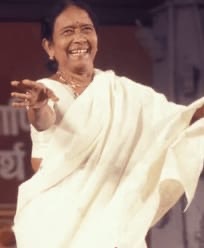
The Story Maharashtra Never Forgot
No account of Vithabai’s life is complete without the story that has been passed down across generations in Maharashtra.
She was nine months pregnant and mid-performance when she realised she was about to go into labour. Rather than stop the show, she went backstage, delivered her baby, cut the umbilical cord herself with a stone, and walked back out to continue performing. The audience noticed her missing baby bump. When they discovered what had happened, they stopped the show and urged her to rest — but the fact that she had returned at all told them everything about who she was. 
It is this very moment that anchors the Eetha teaser, and it’s easy to understand why. It isn’t just a dramatic scene — it’s the clearest possible image of what Vithabai stood for.
Honours, and the Hardship That Followed
Fame in folk theatre has rarely translated to financial security in India, and Vithabai’s story is a painful example of that truth.

Despite earning the admiration of audiences across Maharashtra, receiving presidential recognition twice, and being regarded as one of the greatest folk artists the country has produced, Vithabai’s later years were marked by financial hardship. According to widely documented accounts, including records on Wikipedia, she lived in difficult circumstances in her final years, and the medical bills following her death on January 15, 2002, were settled through donations from well-wishers. 
It is a difficult footnote to a remarkable life — but an important one. It speaks to a broader reality about how India’s traditional artists are valued while they perform, and how easily they can be forgotten once the curtain falls.
In her memory, the Government of Maharashtra established the annual Vithabai Narayangaonkar Lifetime Achievement Award in 2006, presented each year to artists who have made lasting contributions to the preservation and promotion of Tamasha.
Shraddha Kapoor Steps Into Her Shoes
Eetha is directed by Laxman Utekar, who most recently helmed the blockbuster Chhaava, and produced by Dinesh Vijan under the Maddock Films banner. The film chronicles Vithabai’s life from the 1940s through the 1990s — her rise, her sacrifices, and the quiet hardship that shadowed her later years. 
The title itself carries meaning. “Eetha” is the regional pronunciation of “Vitha” — the nickname by which Vithabai was known to those closest to her. It’s a detail that signals how carefully the filmmakers have approached the material.
Shraddha is joined by a strong cast — Randeep Hooda, Nana Patekar, Mohammed Zeeshan Ayyub, and Siddharth Jadhav all appear in key roles. Music is composed by Ajay-Atul, the acclaimed duo behind some of Hindi and Marathi cinema’s most beloved soundtracks.
Eetha is set to release on August 28, 2026, timed with the Raksha Bandhan weekend.
Why This Story Deserves Your Attention
Vithabai Narayangaonkar spent decades doing something quietly extraordinary — she took an art form that struggled for mainstream respect and made it impossible to ignore. She performed through poverty, through personal loss, through pregnancy, and through the kind of relentless touring schedule that would exhaust most performers half her age. 
She didn’t do it for awards, though those came. She did it because Tamasha was her promise — to her father, to her audiences, and to herself.
With Eetha, a generation that never got the chance to see her perform will finally meet her. Whether the film captures the full weight of who she was remains to be seen. But the conversation has started, and Vithabai Narayangaonkar — Maharashtra’s Tamasha Samradini — has waited long enough for it. 
As per the film team the title is more likely a name she was called and recognised as. But still, as some recent reports suggests Late Vithabai Narayangaonkar’s family is demanding a title change of the film as for them it is more than a film. It’s about preserving an identity of an artist who changed the way Tamasha is seen. She transformed Lavani and Tamasha forever into celebrated art forms.
Eetha releases in cinemas on August 28, 2026.